The Ultimate Guide to FRP Grating for Desalination Plant Saltwater Environments
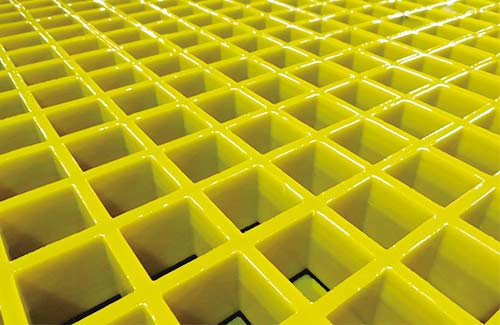
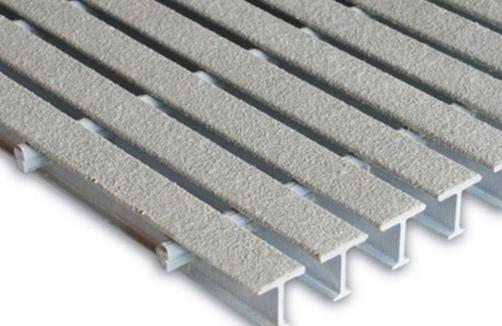
Why is FRP grating becoming the material of choice for desalination facilities worldwide? The answer lies in its exceptional performance in one of the most challenging industrial environments—saltwater exposure. Desalination plants operate in highly corrosive conditions where traditional materials quickly deteriorate, making FRP grating an ideal solution for walkways, platforms, and structural components.

What makes FRP grating uniquely suited for these harsh conditions? Unlike steel or aluminum, FRP (Fiber Reinforced Plastic) doesn’t corrode when exposed to saltwater. This corrosion resistance stems from its composite structure, typically consisting of fiberglass reinforcement and a polymer resin matrix. The material’s non-metallic composition eliminates the risk of galvanic corrosion, a common issue when dissimilar metals contact saltwater.
How does FRP grating compare to traditional materials in terms of longevity and maintenance? Steel grating may require frequent repainting and replacement in marine environments, while FRP grating maintains its structural integrity for decades with minimal maintenance. Studies show FRP grating can last 3-5 times longer than steel equivalents in saltwater applications, resulting in significant lifecycle cost savings.
What installation advantages does FRP grating offer? Its lightweight nature—approximately 75% lighter than steel—reduces structural support requirements and simplifies handling and installation. This is particularly beneficial for retrofitting existing facilities where additional load capacity is limited. Furthermore, FRP grating can be easily cut to size on-site using standard tools, minimizing waste and installation time.
How does FRP grating enhance safety in desalination plants? The material’s inherent slip resistance, even when wet, provides secure footing for workers. Its non-conductive properties eliminate electrical hazards in areas where electrical equipment is present. Additionally, FRP grating doesn’t splinter or create sharp edges when damaged, reducing injury risks.
From my experience working with desalination facilities worldwide, operators consistently report that FRP grating’s initial investment is quickly offset by reduced maintenance costs and extended service life. One plant manager in the Middle East shared that switching to FRP grating reduced their platform maintenance costs by 60% while improving worker safety ratings.
When selecting FRP grating for desalination applications, consider resin formulations specifically designed for saltwater exposure, such as isophthalic or vinyl ester resins. These offer superior resistance to chloride ions and UV degradation, ensuring long-term performance in coastal environments.
In conclusion, FRP grating represents a superior solution for desalination plants seeking durable, safe, and cost-effective materials for saltwater environments. Its corrosion resistance, lightweight nature, and safety features make it an indispensable component in modern desalination infrastructure.