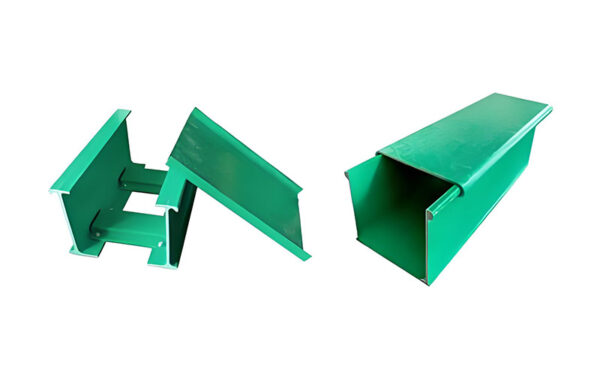
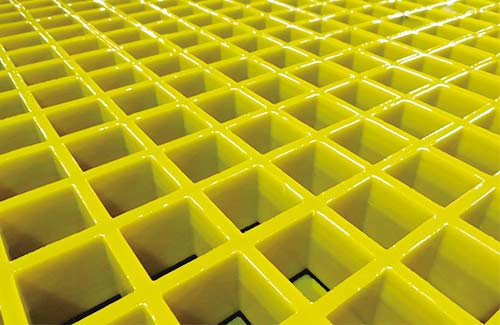
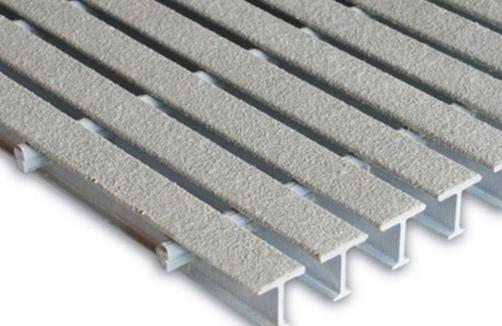
FRP Grating for Desalination Plants: Enhancing Durability and Efficiency in Saltwater Treatment
Desalination plants are critical in providing fresh water to regions facing water scarcity. However, the harsh conditions these plants operate under—exposure to saltwater, corrosive environments, and heavy mechanical loads—can significantly reduce the lifespan of infrastructure. Fiberglass Reinforced Plastic (FRP) grating has emerged as a revolutionary solution to enhance durability and efficiency in saltwater treatment facilities. But what exactly makes FRP grating so suitable for desalination plants? How does it compare to traditional materials? And what are the long-term benefits? Let’s explore these questions in detail.
The Challenges of Saltwater Treatment Infrastructure
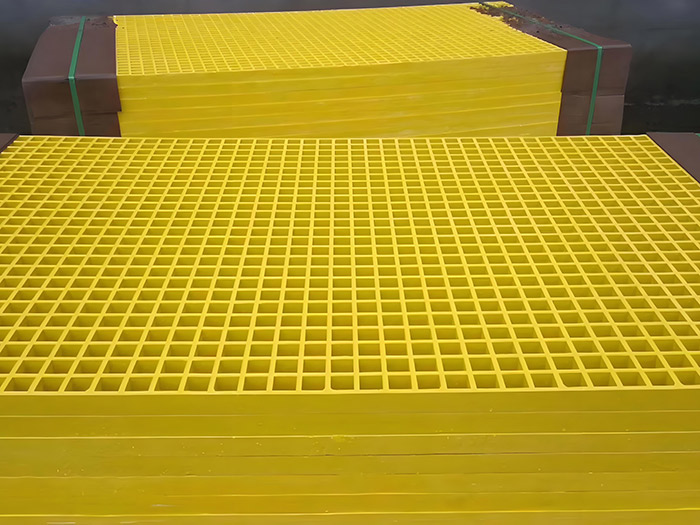
Desalination plants face numerous challenges due to their constant exposure to saltwater and harsh marine environments. Traditional materials like steel and concrete are prone to corrosion and erosion, leading to frequent maintenance and replacement costs. Additionally, the weight of these materials can strain structural supports, reducing overall efficiency.
FRP grating offers a compelling alternative. Unlike steel, FRP does not rust or corrode when exposed to saltwater. Its non-conductive properties also make it safer for electrical installations, reducing the risk of short circuits. Moreover, FRP grating is significantly lighter than steel, allowing for easier installation and reducing the load on supports. These advantages make FRP grating an ideal choice for desalination plants seeking to improve durability and efficiency.
How FRP Grating Enhances Durability
One of the primary benefits of FRP grating is its exceptional durability in saltwater environments. FRP grating is composed of a fiberglass matrix reinforced with polymer resins, creating a material that is both strong and resistant to corrosion. This composition ensures that FRP grating can withstand the relentless assault of saltwater without degrading over time.
In contrast, steel grating requires regular painting and coatings to prevent rust, which can wear off due to wave action and salt spray. Concrete grating, while durable, can crack and erode under constant exposure to saltwater. FRP grating eliminates these issues, providing a long-lasting solution that minimizes maintenance and repair costs.
Another key advantage of FRP grating is its ability to resist chemical attack. Desalination plants often use chemicals like chlorine and sodium hypochlorite for water treatment, which can be corrosive to traditional materials. FRP grating remains unaffected by these chemicals, ensuring that the infrastructure remains in optimal condition for longer periods.
Improving Efficiency with FRP Grating
Efficiency is another critical factor in desalination plants. FRP grating contributes to improved efficiency in several ways. Its lightweight nature reduces the load on structural supports, allowing for the use of less expensive foundations and reducing the overall weight of the plant. This can lead to significant cost savings during construction and operation.
Additionally, FRP grating offers excellent slip resistance, which is crucial for safety in wet environments. The non-slip surface prevents accidents and ensures that workers can safely navigate the plant, even when it is wet or covered in salt. This enhances both operational safety and productivity.
FRP grating also provides excellent thermal stability, which is beneficial in regions with extreme temperatures. Unlike metal grating, which can expand and contract due to temperature changes, FRP grating maintains its dimensions, reducing the risk of structural damage and ensuring consistent performance.
Partager des idées : Études de cas et témoignages de réussite
Many desalination plants around the world have successfully implemented FRP grating, achieving remarkable results. For example, a desalination plant in the Middle East replaced its traditional steel grating with FRP grating after experiencing frequent corrosion and maintenance issues. The switch to FRP grating not only reduced maintenance costs but also extended the lifespan of the infrastructure by several years.
Another case study involves a plant in Southern California, where FRP grating was used for walkways and platforms. The plant reported a significant reduction in slip-related accidents and a decrease in overall maintenance requirements. These success stories demonstrate the tangible benefits of FRP grating in real-world applications.
Conclusion
FRP grating is a game-changer for desalination plants, offering enhanced durability and efficiency in saltwater treatment. By resisting corrosion, chemical attack, and extreme temperatures, FRP grating provides a long-lasting solution that minimizes maintenance and replacement costs. Its lightweight nature and slip-resistant surface also contribute to improved operational safety and efficiency.
As water scarcity continues to be a pressing issue, desalination plants must adopt innovative solutions to ensure reliable and cost-effective water treatment. FRP grating stands out as a superior material that meets these challenges head-on, making it an indispensable asset for any desalination facility. By choosing FRP grating, plants can not only enhance their operational performance but also contribute to a more sustainable and water-secure future.