
Sino Composite Structures Co, Ltd.

+86-510-86890852

WhatsApp : 8618921275456

Sino Composite Structures Co, Ltd.

+86-510-86890852

WhatsApp : 8618921275456

Actualités

Accueil " Actualités " Page 91

Le rôle des profils FRP dans les projets de ponts et d'infrastructures

Fiber-Reinforced Polymers (FRP) have emerged as a revolutionary material in the construction sector, offering a range of advantages that make them particularly suitable for bridge and infrastructure projects. This article explores the critical role FRP profiles play in these applications, highlighting their benefits, challenges, and the innovative approaches to utilizing this technology for the betterment of our built environment. The Rise of FRP in Infrastructure FRP composites consist of polymer matrix reinforced with strong fibers, primarily carbon, glass, or aramid. These materials are gaining prominence due to their superior mechanical properties, corrosion resistance, and lighter weight compared to traditional materials like steel and concrete. As a result, FRP profiles—bars, beams, girders, and plates—are increasingly being used in bridge construction, repair, and strengthening, as well as in other critical infrastructure projects. Advantages of FRP in Bridges and Infrastructure Corrosion Resistance One of the primary reasons for the adoption of FRP in infrastructure projects is its unparalleled resistance to corrosion. In harsh environments, such as coastal areas or regions where de-icing salts are frequently used, traditional materials like steel and concrete are prone to degradation over time. FRP, however, remains impervious to these corrosive elements, thereby extending the service life of structures
Lire plus "

Améliorer la durabilité des bâtiments grâce à la technologie avancée des profilés en FRP

In an era where sustainability and longevity are paramount, the construction industry is constantly on the lookout for innovative materials that can enhance the durability and performance of buildings. One such material that has gained significant traction in recent years is Fiber-Reinforced Polymer (FRP). This article delves into how advanced FRP profiles technology is reshaping the way we build, ensuring structures stand the test of time while also contributing to a greener future. Introduction to FRP Profiles Fiber-Reinforced Polymers (FRP) are composite materials made by reinforcing thermosetting or thermoplastic polymers with strong fibers, typically carbon, glass, or aramid. These profiles offer a range of benefits over traditional building materials like steel and concrete. They are lightweight yet incredibly strong, corrosion-resistant, and have high tensile strength-to-weight ratios, making them ideal for various applications in construction. The Evolution of FRP Profiles The development of FRP profiles has been driven by the need for more durable, sustainable, and versatile construction solutions. Early applications were limited due to cost and manufacturing constraints, but advancements in polymer chemistry and fiber technology have led to a proliferation of products tailored to specific construction needs. Today, FRP profiles come in various forms, including beams, rods, bars, grids,

Lire plus "

Capacité de charge des caillebotis en PRFV dans les ponts et passerelles de navires

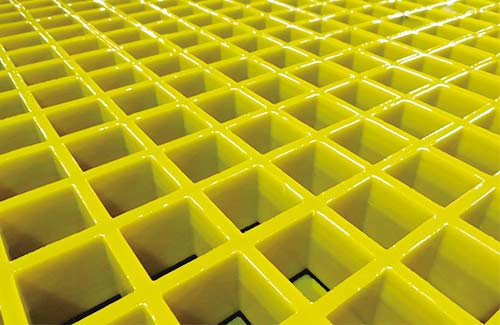
FRP grating has gained widespread acceptance in the marine industry due to its exceptional corrosion resistance, lightweight nature, and durability. This paper focuses on the load-bearing capabilities of FRP grating in vessel decks and walkways, providing a comprehensive overview of its performance characteristics and design considerations. Material Properties of FRP Grating FRP grating is composed of fiberglass fibers embedded in a resin matrix, typically polyester or vinylester. The combination of these materials results in a composite material with the following properties: – High Strength-to-Weight Ratio: FRP grating offers excellent strength while maintaining a lightweight structure.– Corrosion Resistance: It is highly resistant to corrosion from saltwater and chemicals commonly found in marine environments.– Non-Conductive: FRP grating does not conduct electricity, making it safe for use in electrical applications. Design Considerations for Load-Bearing Applications When designing FRP grating for vessel decks and walkways, several factors need to be considered: 1. Load Requirements: The anticipated loads must be determined based on the intended use, such as pedestrian traffic, equipment weight, or vehicle loads.2. Support Structure: The underlying support structure must be designed to accommodate the loads and ensure the stability of the grating system.3. Deflection Criteria: Deflection limits are established to ensure that

Lire plus "

Analyse comparative des caillebotis pultrudés en PRFV et des caillebotis métalliques traditionnels

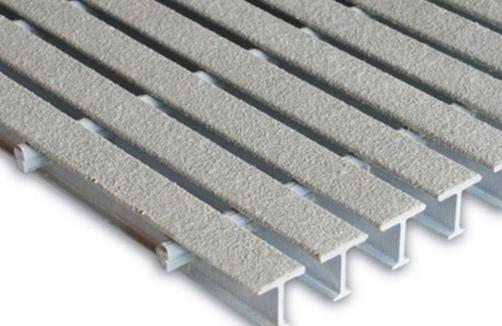
Gratings are commonly used in various industrial and commercial applications, including walkways, platforms, and drainage systems. Traditionally, metal gratings have been the standard choice due to their strength and durability. However, with advancements in composite materials, FRP pultruded grating has become a viable alternative offering several advantages over metal. This paper explores the key differences and benefits of each type of grating. Material Properties FRP Pultruded Grating:-Composition: Fiberglass reinforced polymer (FRP) is a composite material consisting of fiberglass fibers embedded in a polymer resin matrix.-Strength-to-Weight Ratio: FRP pultruded grating offers a high strength-to-weight ratio, making it lightweight yet strong.-Corrosion Resistance: FRP is inherently resistant to corrosion from chemicals, saltwater, and atmospheric conditions. Traditional Metal Gratings:-Materials: Commonly made from steel or aluminum, which offer high strength and stiffness.-Corrosion Protection: Typically require coatings or treatments such as galvanizing or painting to prevent corrosion. Durability and Maintenance Requirements FRP Pultruded Grating:-Durability: FRP pultruded grating can last for decades without significant degradation, especially in harsh environments.-Low Maintenance: Requires minimal maintenance, with occasional cleaning being sufficient. Traditional Metal Gratings:-Durability: Metal gratings also offer long service life but may require more frequent maintenance to prevent corrosion.-Maintenance: Regular inspections, recoating, and replacement of damaged sections are necessary

Lire plus "

Actualités

Produit phare

滚动至顶部