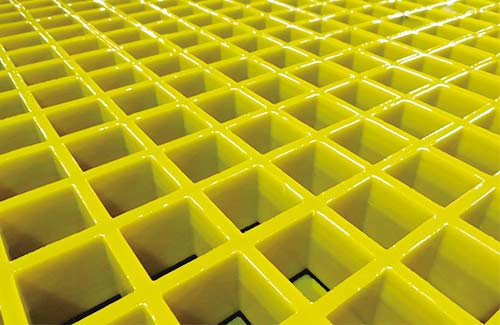
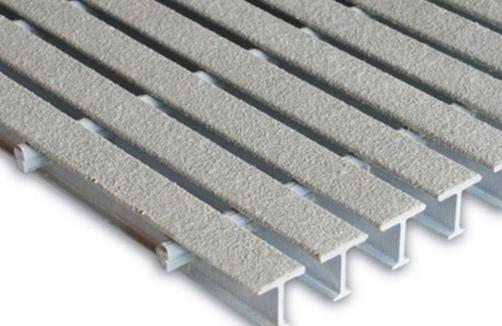
FRPグレーチングの原理とは?
Fiber Reinforced Polymer (FRP) grating, also known as fiberglass grating, is a composite material that has gained significant popularity in various industrial and commercial applications. It is known for its high strength, durability, and resistance to corrosion, making it an ideal choice for environments where traditional materials like steel or wood may not perform well. This article will delve into the working principle of FRP grating, its composition, manufacturing process, and the wide range of applications where it excels. 1. Composition of FRP GratingFRP grating is composed of two main components: resin and reinforcing fibers. The resin serves as the matrix, providing the structural integrity and chemical resistance, while the reinforcing fibers, typically made of glass, carbon, or aramid, provide the strength and stiffness. -Resin: The resin used in FRP grating can be either polyester, vinyl ester, or epoxy. Each type of resin offers different properties, such as chemical resistance, UV stability, and thermal performance.-Reinforcing Fibers: Glass fibers are the most common type of reinforcing fiber used in FRP grating. They are lightweight, strong, and have excellent tensile strength. Carbon fibers and aramid fibers are also used in specialized applications where higher strength or specific properties are required. 2. Manufacturing