FRP Grating on Marine Vessels and Docks: Enhancing Durability and Safety in Nautical Structures
Marine environments present unique challenges for infrastructure, including vessels and docks, due to exposure to saltwater, harsh weather, and heavy loads. Traditional materials like steel and concrete are prone to corrosion, cracking, and degradation over time, leading to maintenance costs and safety risks. Fiber-Reinforced Polymer (FRP) grating has emerged as a superior alternative, offering enhanced durability and safety. But what makes FRP grating the ideal choice for marine applications? How does it compare to conventional materials? And what are the key benefits for shipyards and dock operators?
Los retos de los materiales tradicionales

Traditional materials used in marine structures, such as steel and wood, face significant drawbacks. Steel, while strong, corrodes rapidly in saltwater environments, requiring frequent painting and coatings to prevent rust. Wood, on the other hand, rots and splinters over time, posing safety hazards. These issues not only reduce the lifespan of structures but also increase maintenance costs and downtime.
Concrete docks and vessels also suffer from cracking due to thermal expansion, freeze-thaw cycles, and heavy loads. The need for constant repairs and replacements can be costly and disruptive for operators.
¿Qué es la rejilla FRP?
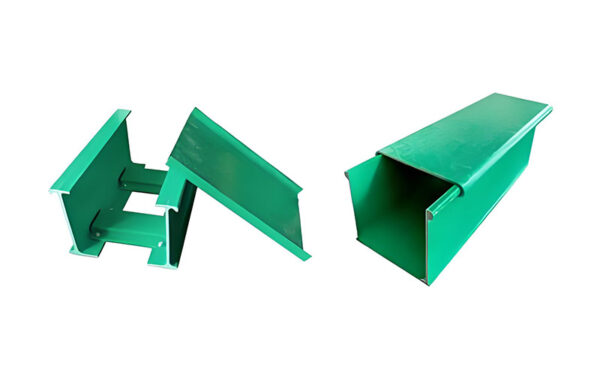
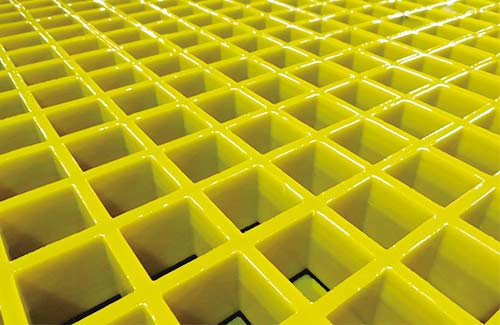
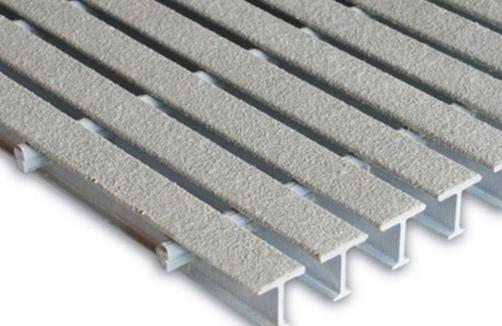
FRP grating is a composite material made from fibers, typically fiberglass, embedded in a polymer matrix. This combination creates a lightweight, corrosion-resistant, and high-strength material that excels in marine environments. Unlike steel, FRP does not rust, and unlike wood, it does not rot. Its non-conductive properties also make it safer for electrical installations in docks and ships.
Principales ventajas de la rejilla FRP
- Durabilidad: FRP grating withstands saltwater, UV radiation, and chemical exposure without degradation. Its long service life reduces replacement costs and maintenance requirements.
- Ligero: Weighing significantly less than steel, FRP grating reduces structural load on docks and vessels, preventing additional stress on foundations.
- Safety: With a high coefficient of friction, FRP grating prevents slips and falls, even when wet. Its non-conductive nature also minimizes electrical hazards.
- Personalizable: FRP grating can be molded into various shapes and sizes, offering flexibility for different marine applications.
Preguntas frecuentes
Q: Is FRP grating more expensive than traditional materials?
While the initial cost of FRP grating may be higher than steel or wood, its long-term durability and low maintenance requirements make it a cost-effective solution. Over time, the savings on repairs and replacements often outweigh the upfront investment.
Q: Can FRP grating support heavy loads?
Yes, FRP grating is engineered to handle substantial loads, making it suitable for use on docks, gangways, and ship decks. Its strength-to-weight ratio is superior to many traditional materials.
Q: How long does FRP grating last?
With proper installation and minimal maintenance, FRP grating can last 30-50 years, far outperforming steel and concrete structures in marine environments.
Why Choose FRP Grating for Marine Applications?
For shipyards and dock operators, FRP grating offers a reliable and sustainable solution to the challenges of marine infrastructure. Its resistance to corrosion, combined with its lightweight and safety features, makes it an ideal choice for enhancing durability and safety in nautical structures.
By reducing maintenance costs and extending service life, FRP grating provides long-term value while improving operational efficiency. As the demand for sustainable and high-performance materials grows, FRP grating is poised to become the standard for marine applications worldwide.
If you are looking to upgrade your marine infrastructure, consider the benefits of FRP grating. It’s not just a material; it’s an investment in durability, safety, and peace of mind. Share your experiences or questions about FRP grating in marine environments below—let’s discuss how this innovative solution can benefit your operations.