Sino Composite Structures Co, Ltd.

+86-510-86890852

WhatsApp : 8618921275456

Sino Composite Structures Co, Ltd.

+86-510-86890852

WhatsApp : 8618921275456

Recherche
Fermer cette boîte de recherche.

Actualités

Accueil " Actualités

FRP Grating Railing System Integration: Complete Guide for 2023

FRP Grating Railing System Integration: Key Considerations for 2023 As industries increasingly seek durable, cost-effective safety solutions, FRP grating railing systems have emerged as a premier choice. But what makes these composite railing systems stand out in today’s market? What Exactly Is FRP Grating Railing? FRP (Fiberglass Reinforced Plastic) grating railing systems consist of reinforced plastic bars intersecting at right angles, supported by vertical posts and horizontal rails. These structures provide essential fall protection while offering superior corrosion resistance compared to traditional metal alternatives. Why Choose FRP Over Traditional Materials? The primary advantage lies in fiberglass railing’s exceptional durability. Unlike steel or aluminum, FRP doesn’t rust, corrode, or require frequent painting. This makes composite railing particularly valuable in harsh environments like chemical plants, marine facilities, and wastewater treatment centers where moisture and corrosive substances are prevalent. What Are the Key Installation Considerations? Proper installation begins with accurate load calculations. FRP grating railing systems must meet safety standards while accounting for environmental factors. When installing, remember that thermal expansion differs from metal systems, requiring appropriate expansion gaps. Additionally, specialized cutting tools are necessary to maintain the material’s integrity during customization. Maintenance and Longevity One of the most compelling benefits of FRP

Lire plus "

Pultruded FRP Grating Cross Rod Lock Design: Engineering Excellence for Superior Performance

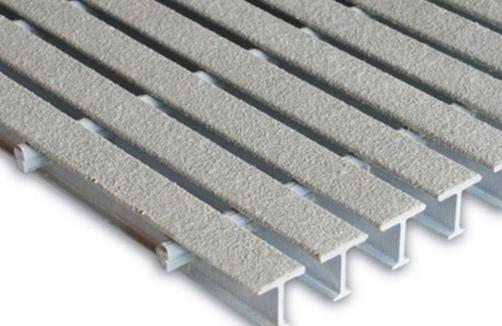
The Engineering Brilliance Behind Pultruded FRP Grating Cross Rod Lock Design What makes pultruded FRP grating stand out in demanding industrial environments? The answer lies largely in its cross rod lock design, a critical engineering feature that ensures superior performance and longevity. This innovative design element represents the intersection of material science and structural engineering, creating a solution that addresses common challenges in grating applications. How Does Cross Rod Lock Design Enhance Structural Integrity? The cross rod lock design fundamentally improves the connection between bearing bars and cross rods in pultruded FRP grating. Unlike traditional mechanical fasteners that may loosen over time, this integrated locking mechanism creates a permanent bond that resists shear forces and distributes loads more effectively. The engineering excellence behind this design ensures that the grating maintains its structural integrity even under heavy impact or constant vibration—common occurrences in industrial settings. What Performance Benefits Does This Design Offer? One of the most significant advantages of the cross rod lock design is its exceptional load capacity. The interlocking system creates a more rigid structure that minimizes deflection, making it ideal for applications requiring high strength-to-weight ratios. Additionally, this design contributes to the grating’s corrosion resistance by eliminating potential

Lire plus "

Molded FRP Grating with Covered Top Surface: Superior Strength & Slip Resistance

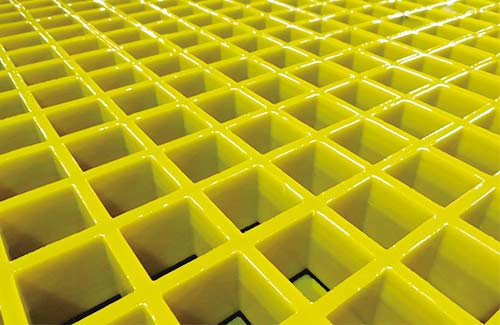
Molded FRP Grating with Covered Top Surface: Superior Strength & Slip Resistance In industrial environments where safety and durability are paramount, choosing the right flooring solution can make all the difference. But what exactly is molded FRP grating, and how does its covered top surface provide superior performance? Molded FRP grating represents a significant advancement in composite material technology. Unlike traditional metal gratings, these fiberglass-reinforced plastic panels offer exceptional strength-to-weight ratios while maintaining excellent corrosion resistance. The covered top surface, typically featuring a molded grit or pattern, dramatically enhances slip resistance even in wet or oily conditions. What makes this material particularly valuable in industrial settings? The answer lies in its unique combination of properties. FRP grating doesn’t conduct electricity, making it ideal for electrical environments. Its high load capacity ensures it can withstand heavy equipment and foot traffic, while its UV resistance prevents degradation from sun exposure. How does the covered top surface technology work? During manufacturing, a specialized surface layer is integrally molded onto the grating, creating a permanent non-slip surface that won’t wear away or detach over time. This contrasts mechanically attached surfaces that can fail under heavy use. Industries ranging from chemical processing plants to water

Lire plus "

Vinyl ester resin FRP grating chemical compatibility chart: Complete reference guide for industrial applications

Navigating Chemical Compatibility: A Guide to Vinyl Ester Resin FRP Grating Selection When selecting materials for harsh industrial environments, one critical question emerges: How well does vinyl ester resin FRP grating withstand chemical exposure? This question forms the foundation of material selection in industries ranging from wastewater treatment to chemical processing. Understanding chemical compatibility isn’t just about preventing degradation—it’s about ensuring safety, longevity, and cost-effectiveness. What exactly makes vinyl ester resin FRP grating suitable for chemical resistance? The answer lies in its molecular structure, which offers superior resistance to a broad spectrum of chemicals compared to polyester resins. However, “chemical resistance” is a relative term. The real question becomes: Which specific chemicals can the material withstand, and under what conditions? This is where a comprehensive chemical compatibility chart becomes an indispensable tool. How should one interpret a chemical compatibility chart effectively? These charts typically categorize chemical resistance as excellent, good, fair, or poor, often with temperature considerations. For instance, sulfuric acid might show excellent resistance at room temperature but only fair resistance at elevated temperatures. Understanding these gradations helps engineers make informed decisions rather than relying on oversimplified assumptions. What factors beyond the chemical itself influence compatibility? Concentration, temperature, pressure,

Lire plus "

Actualités

Produit phare

滚动至顶部