
Sino Composite Structures Co.,Ltd.

+86-510-86890852

WhatsApp: 8618921275456

Sino Composite Structures Co.,Ltd.

+86-510-86890852

WhatsApp: 8618921275456

Notizie

Casa " Notizie " Pagina 99

La produzione automatizzata di grigliati in vetroresina è diventata una nuova tendenza di sviluppo

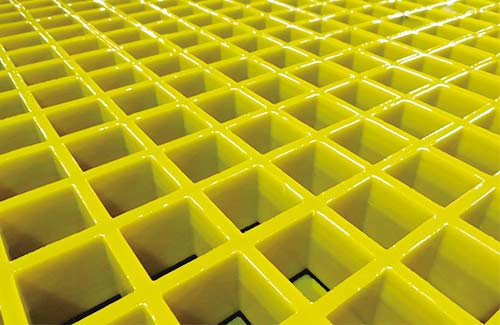
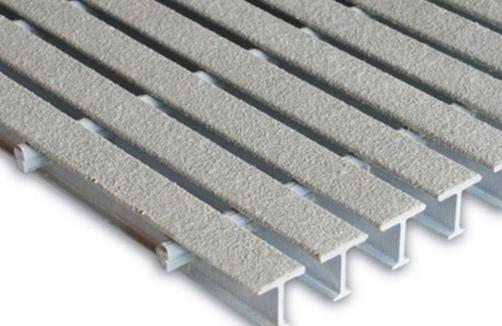
At present, the production process of fiberglass grating is basically completed manually, which has low production efficiency, high labor intensity, and uneven fiberglass after manual labor, directly affecting the quality of the product. Automated production of fiberglass grating has become a new trend in development. FRP Grating Fiberglass grating is a type of plate-shaped material with many spaces, which is reinforced with glass fiber and made of unsaturated polyester resin as the matrix through special processing and composite. Fiberglass grating can be used as a structural material for floors, trench covers, platforms, ship decks, stairs, walkways, etc. in corrosive environments.To achieve automated production of fiberglass grating, a fiberglass grating automated production equipment is needed, which has been applied by some manufacturers. It includes a truss, a fiberglass grating mold set below the truss, and a laying device that reciprocates along the X-axis and Y-axis directions on the truss. The laying device corresponds to the fiberglass grating mold. Automated production of fiberglass grating Development direction of fiberglass grating:1. The large-scale and integrated production of fiberglass grilles: Large cooling towers, chimneys, wind turbine blades, large-diameter fiberglass pipelines, and other products reflect the characteristics of large-scale production in the fiberglass industry. The scale
Continua a leggere "

Processo di trattamento superficiale per la produzione di pannelli grigliati in vetroresina

When the fiberglass grating board is just out of the furnace, its appearance does not have a lubricated and clean luster, and it needs to be processed to achieve the expected effect.The quality of the fiberglass formed parts used in the production of fiberglass grating machines has a significant impact on the appearance of the products and is also closely related to the degree of lubrication. In addition to the quality of these materials, what is important is the overall skill nature of the mold’s quality and service life. However, domestically produced fiberglass molds are a good structure, but compared to other industrialized countries, the appearance quality of the products is poor, as well as the lack of mold materials, manufacturing equipment and conditions. More importantly, most domestic manufacturers do not attach great importance to these details as some foreign factories do, and mainly rely on experience in precision machining of the mold surface. The appearance processing technology of fiberglass molds is introduced as follows:1. Water grinding method – innovation of new or old modes, water sandpaper is used for water grinding. Water sandpaper is used at the starting point of water grinding, usually from 600. Some users, in order

Continua a leggere "

Migliorare la sicurezza con le griglie in PRFV: Superfici antiscivolo e altro

Fiber Reinforced Polymer (FRP) grating has emerged as a robust solution for enhancing safety in various environments. Its non-slip properties, combined with its durability, corrosion resistance, and ease of installation, make it an ideal choice for many industrial and commercial applications. This paper explores the benefits of FRP grating beyond just providing slip-resistant surfaces, highlighting its role in improving safety standards across different sectors. 1. Introduction to FRP Grating Fiber Reinforced Polymer (FRP) grating is a composite material made from a polymer matrix reinforced with fibers, typically glass, carbon, or aramid fibers. The resulting product combines the lightweight characteristics of plastics with the strength and rigidity of metal. FRP grating can be molded into various shapes and sizes, making it adaptable to numerous applications where traditional materials like steel might not be suitable due to weight, corrosion, or conductivity concerns. 2. Non-Slip Surface Properties One of the most significant advantages of FRP grating is its inherent non-slip surface, which provides excellent traction even under wet conditions. This property is particularly valuable in areas prone to water accumulation, such as marine environments, chemical plants, and food processing facilities. Unlike metal gratings that can become dangerously slick when wet, FRP grating maintains

Continua a leggere "

Griglie in FRP: Una scelta superiore per le pavimentazioni industriali

In the realm of industrial flooring, the choice of material can significantly impact the safety, efficiency, and longevity of a facility. Fiberglass Reinforced Plastic (FRP) grating has emerged as a superior choice for various industrial applications due to its unique combination of strength, durability, and resistance to corrosive environments. This comprehensive guide delves into the properties of FRP grating, its applications, benefits, and why it’s becoming the material of choice for many industries.   Introduction to FRP Grating FRP grating is a composite material made from glass fibers reinforced with a resin matrix. The glass fibers provide strength and rigidity, while the resin matrix ensures chemical resistance and weatherability. This combination results in a lightweight, high-strength, and corrosion-resistant material that is ideal for industrial flooring.   Properties of FRP Grating High Strength-to-Weight Ratio: FRP grating is known for its high strength-to-weight ratio, making it an excellent choice for applications where weight is a concern, such as in walkways, platforms, and trench covers. Corrosion Resistance:One of the most significant advantages of FRP grating is its resistance to a wide range of chemicals, including acids, alkalis, and salts. This property makes it suitable for use in chemical plants, wastewater treatment facilities, and

Continua a leggere "

Notizie

Prodotto caldo

滚动至顶部