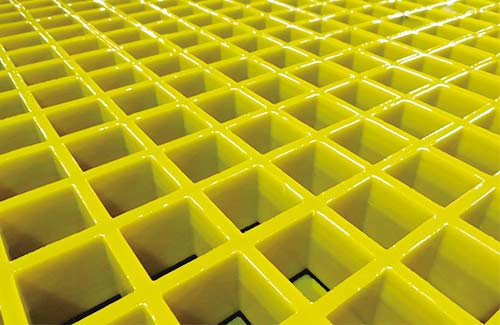
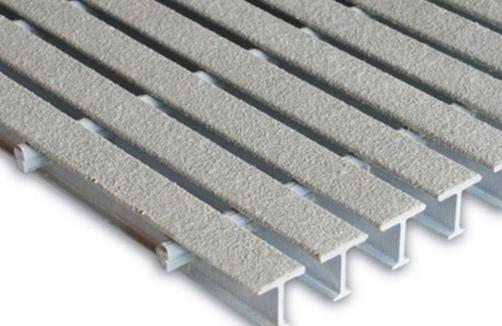
شبكة FRP عالية القوة: مقدمة شاملة
In the field of modern materials, high – strength FRP (Fiber – Reinforced Polymer) grating stands out as a revolutionary solution. Its unique property combination makes it suitable for diverse applications. This article explores its composition, properties, applications, and future prospects. Composition, Reinforcing Materials, and ManufacturingHigh – strength FRP grating primarily uses glass fiber as the reinforcing material. Known for its high tensile strength, it acts as the load – bearing component, enhancing the overall strength. Fibers can be arranged in various patterns, like woven mats or continuous strands, based on performance requirements.The matrix is usually unsaturated polyester resin, binding glass fibers and ensuring structural cohesion. It offers good chemical resistance and low viscosity for easy fiber impregnation, creating a homogeneous composite. In highly corrosive environments, vinyl ester resin is preferred for greater resistance.There are two main manufacturing methods. For molded FRP grating, a glass fiber – resin mixture is poured into a mold and cured by heat and pressure, allowing for complex – shaped gratings with precise dimensions. Pultruded FRP grating involves pulling fibers through a resin bath and shaping them with a heated die, ideal for long, straight sections with consistent cross – sections, commonly used in industrial