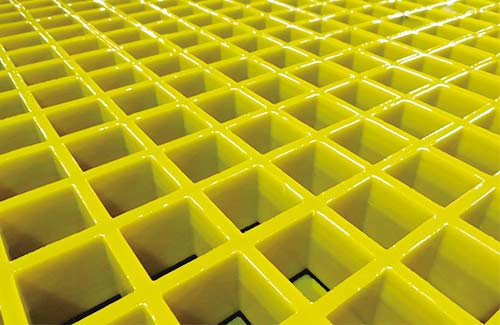
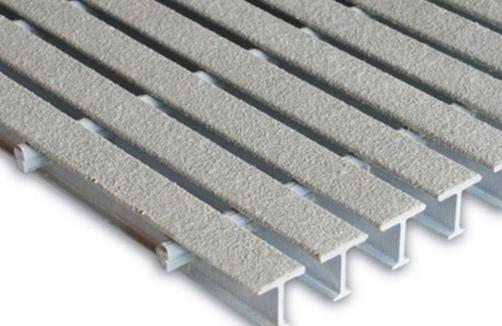
Una mirada en profundidad a las rejillas FRP ignífugas
In the composite material field, flame – retardant FRP (Fiberglass Reinforced Plastic) grating has become a versatile and essential product, with its features, applications, manufacturing process, and significance in various industries drawing wide attention. Flame – retardant FRP grating is made of glass fiber as the reinforcing material, a resin matrix, and special flame – retardant additives. Glass fibers provide strength and rigidity, while the resin binds them and shapes the grating. The additives work through releasing non – combustible gases to dilute oxygen or forming a char layer to block heat transfer, thus endowing fire resistance. Commonly used resins like polyester, vinyl ester, and phenolic resins each have distinct flame – retardant, chemical – resistant, and mechanical properties. For instance, phenolic resins excel in fire resistance with a low flame spread index, and E – glass or S – glass fibers are selected based on strength and cost needs. This grating boasts multiple outstanding characteristics. Its flame – retardant performance meets strict standards, with high – quality products having a low flame spread index, for example, less than 25 for polyester – based ones and less than 10 for some vinyl ester – based ones, effectively preventing fire spread.