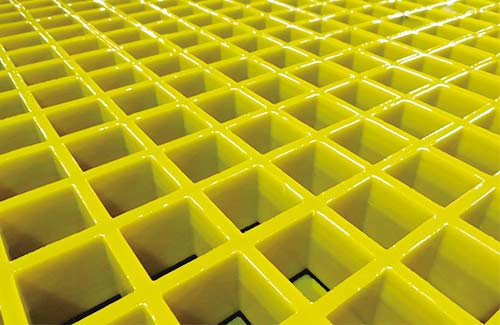
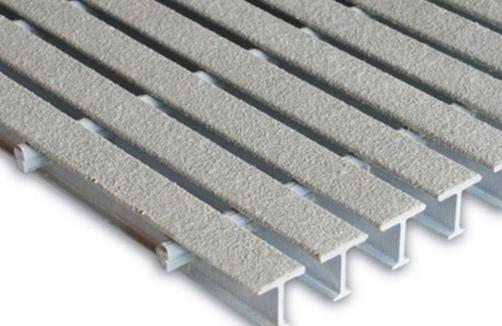
In the dynamic landscape of modern materials, FRP diamond hole grating stands out as an exceptional innovation, seamlessly integrating functionality, durability, and versatility. This article aims to comprehensively explore this material, from its fundamental composition to its wide – ranging applications and the advantages it holds over traditional alternatives.FRP, or Fiberglass Reinforced Plastic, also referred to as fiberglass reinforced polymer, is a composite material. It consists of glass fibers embedded within a polymer matrix, typically made from epoxy, polyester, or vinyl ester resin. The glass fibers contribute high tensile strength, enabling the material to withstand significant forces. Meanwhile, the resin matrix serves a dual purpose: it binds the glass fibers together, safeguarding them from environmental factors, and evenly distributes loads across the structure. As a result, FRP is lightweight yet impressively strong, with remarkable corrosion resistance.FRP diamond hole grating features a distinctive diamond – shaped pattern of holes. This pattern isn’t just aesthetically unique; it significantly enhances the grating’s structural integrity, providing greater load – bearing capacity compared to other grating designs. The holes facilitate efficient drainage and ventilation, making the grating suitable for numerous applications where these functions are essential. Structurally, the grating comprises two main components: bearing bars