
Sino Composite Structures Co.,Ltd.

+86-510-86890852

WhatsApp: 8618921275456

Sino Composite Structures Co.,Ltd.

+86-510-86890852

WhatsApp: 8618921275456

News

Home » News » Page 76

FRP Grating with Anti – Static Coating for Electrical Safety

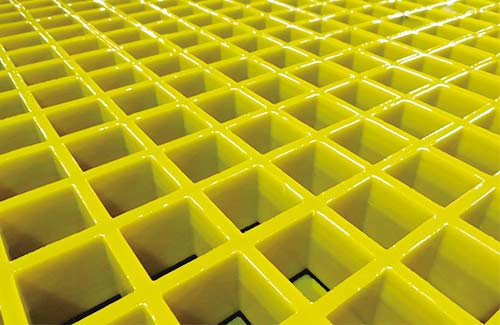
FRP grating with anti-static coating solves electrostatic discharge (ESD) risks in hazardous environments. This composite combines FRP’s durability with a conductive coating to dissipate static charges, ensuring safety without compromising structural performance.​The coating, a polymer binder with carbon fibers/metal oxides, is applied via spray/dip coating to pultruded FRP grating. Curing achieves 10⁶–10¹¹ ohm surface resistance, meeting ESD standards while preserving mechanical properties.​Unlike pure FRP, the coating safely dissipates static to grounding points, critical for industries with flammables or sensitive electronics. Its durability resists wear and chemicals, maintaining conductivity long-term.​With a 0.1–0.5 mm thin layer, mechanical properties match standard FRP: high strength-to-weight ratio and corrosion resistance outperform metal gratings in harsh settings.​FRP and coating resist acids, alkalis, saltwater, UV, and abrasion, eliminating anti-static reapplication needs.​Applications include electronics cleanrooms, pharma, chemical plants, and data centers—preventing ESD damage, contamination, or ignition. Lightweight design eases installation; on-site fabrication allows custom fits.​Simple non-abrasive cleaning maintains the coating. Certifications like ANSI/ESD S20.20 ensure compliance, while non-conductive FRP prevents shocks.​Sustainability features: recycled glass fibers, low-VOC coatings, long lifespan, and lightweight design reducing emissions. Homogeneous structure aids recycling.​This innovation merges electrical safety with FRP durability, addressing ESD challenges. Advancing coating tech will expand its role in future infrastructure.
Read More »

FRP Composite Grating with Metal Insert: Merging Strength and Versatility

FRP composite grating with metal inserts blends Fiberglass Reinforced Plastic’s corrosion resistance and light weight with metal’s structural rigidity. This hybrid material integrates steel or aluminum inserts into the FRP matrix, redefining performance in environments requiring both strength and durability.​Manufactured via pultrusion, glass fibers impregnated with resin form the base, with pre-shaped metal inserts (flat bars, channels) embedded during production. Encapsulated by FRP, the metal core creates a monolithic structure, enhancing load-bearing capacity, dimensional stability, and impact resistance while retaining FRP’s corrosion resistance.​The metal insert acts as a load-bearing backbone, boosting flexural strength by up to 50% compared to pure FRP. This suits long-span applications or high-point loads. The metal core also mitigates FRP’s thermal expansion, improving stability in fluctuating temperatures.​Corrosion resistance is maintained as the metal is fully encapsulated. FRP acts as a barrier against chemicals, UV, and pollutants, outperforming traditional metal gratings in harsh environments and reducing maintenance costs.​Design flexibility allows customization of metal insert materials (stainless steel, aluminum), shapes, and placement. Anti-slip surfaces enhance safety, and the composite is easily fabricated for on-site modifications.​Applications include oil refineries, maritime infrastructure, and power plants, where it combines corrosion resistance with heavy-load capability. In offshore rigs, it withstands saltwater while

Read More »

FRP Hollow Bar Grating: Redefining Structural Efficiency

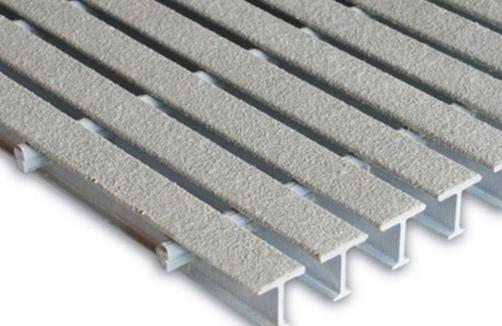
In composite materials, Fiberglass Reinforced Plastic (FRP) hollow bar grating stands out for its innovative design. Combining FRP’s corrosion resistance with a hollow structure, it offers key benefits in weight reduction, design flexibility, and cost optimization. Unlike solid bar grating, it balances load-bearing capacity with material efficiency, solving modern infrastructure challenges.​FRP hollow bar grating uses a specialized pultrusion process. Glass fibers are saturated with resin—usually polyester, vinyl ester, or epoxy—then drawn through a heated die to form the hollow core. This process ensures consistent wall thickness and dimensional accuracy, reducing material use without sacrificing strength.​The hollow design cuts weight by 30-40% compared to solid grating while maintaining flexural strength. This reduces transportation and installation costs and lightens loads on structures. The hollow core also improves thermal insulation, and the open structure aids drainage and ventilation in corrosive environments.​Corrosion resistance is a core advantage. FRP hollow bar grating withstands saltwater, chemicals, and pollutants, eliminating the need for maintenance or coatings. It’s ideal for marine applications like offshore platforms and docks, and its non-conductive nature suits electrical installations.​Mechanically, it has high tensile strength along fiber lines, suitable for unidirectional loads. While lateral strength is lower, design adjustments like rib reinforcements address this.

Read More »

FRP Solid Bar Grating: A Comprehensive Overview

In the realm of modern construction and industrial applications, materials that offer a combination of strength, durability, and corrosion resistance are highly sought after. Fiberglass Reinforced Plastic (FRP) solid bar grating has emerged as a top choice in this regard, revolutionizing the way we approach various projects. This article delves deep into the world of FRP solid bar grating, exploring its composition, manufacturing process, properties, applications, and advantages over traditional materials.​FRP solid bar grating is a composite material, meticulously crafted by combining glass fibers with a polymer resin matrix. The glass fibers, acting as the reinforcement, provide remarkable tensile strength, while the resin matrix binds the fibers together and offers protection against environmental factors. This synergistic combination results in a material that is not only strong but also highly resistant to corrosion, making it suitable for use in a wide range of harsh environments. The manufacturing process of FRP solid bar grating typically involves pultrusion, a continuous and efficient method. In this process, glass fibers are first impregnated with the resin matrix. The impregnated fibers are then pulled through a heated die, which gives the grating its desired shape. The heat from the die cures the resin, solidifying the structure

Read More »

News

Hot Product

滚动至顶部